Blood donation is a fundamental, life-saving act of altruism. Every day, thousands of patients undergoing surgery, managing severe trauma, or receiving cancer therapies rely on donated blood products. For individuals living with Type 1 Diabetes Mellitus (T1D), the desire to donate blood often comes with hesitation and uncertainty: “Can Type 1 Diabetics give blood safely?”
Historically, medical guidelines regarding blood donation for insulin-dependent individuals were restrictive and varied significantly between countries. Myths surrounding insulin in donated blood and potential risks to the donor created confusion. Today, however, advances in transfusion medicine and global blood banking protocols have established clearer, evidence-based guidelines.
The short answer is yes, many individuals with Type 1 Diabetes can donate blood, but eligibility depends on specific clinical criteria—primarily glycemic stability, absence of severe complications, and local regulatory standards.
This comprehensive guide, powered by MyDiaCalc, explores global donor eligibility criteria, the physiological impact of blood donation on blood glucose levels, insulin management protocols before and after donation, and essential safety considerations.
🚨 CRITICAL MEDICAL DISCLAIMER & LIMITATION OF LIABILITY (1/3): MyDiaCalc, its developers, authors, and operators DO NOT PROVIDE MEDICAL ADVICE. All clinical guidelines, donor eligibility thresholds, and insulin management strategies discussed in this article are strictly for educational and informational purposes. MyDiaCalc EXPRESSLY DISCLAIMS ALL LIABILITY for any adverse medical events, acute hypoglycemia, post-donation dysglycemia, or donor deferrals resulting from the application of concepts presented herein. Always consult your endocrinologist and verify local blood donation center regulations before attempting to donate blood.
1. Global Eligibility Standards for Donating Blood with T1D
Blood donation regulations differ depending on the governing public health authority. Understanding the rules enforced by major regulatory bodies helps prospective donors assess their eligibility.
+———————————————————————–+
| GLOBAL BLOOD DONATION ELIGIBILITY WITH T1D |
+———————————————————————–+
| Regulatory Body / Country | Eligibility Status |
+—————————+——————————————-+
| United States (FDA / ARC) | Allowed if diabetes is controlled and no |
| | bovine insulin was ever used. |
| United Kingdom (NHS BT) | Permanently Deferred (Strict Restriction) |
| Canada (Héma-Québec / CBS)| Allowed if controlled and feeling well on |
| | the day of donation. |
| Australia (Lifeblood) | Allowed subject to medical assessment and |
| | stable insulin regimen. |
| European Union (ECDC) | Varies by member state; mostly allowed if |
| | well-controlled without complications. |
+———————————————————————–+
A. United States (FDA & American Red Cross)
In the U.S., the Food and Drug Administration (FDA) and the American Red Cross allow individuals with Type 1 Diabetes to donate whole blood or blood components, provided they meet the following baseline conditions:
- Glycemic Control: Diabetes must be well-controlled, with stable glucose readings and no recent episodes of severe hypoglycemia.
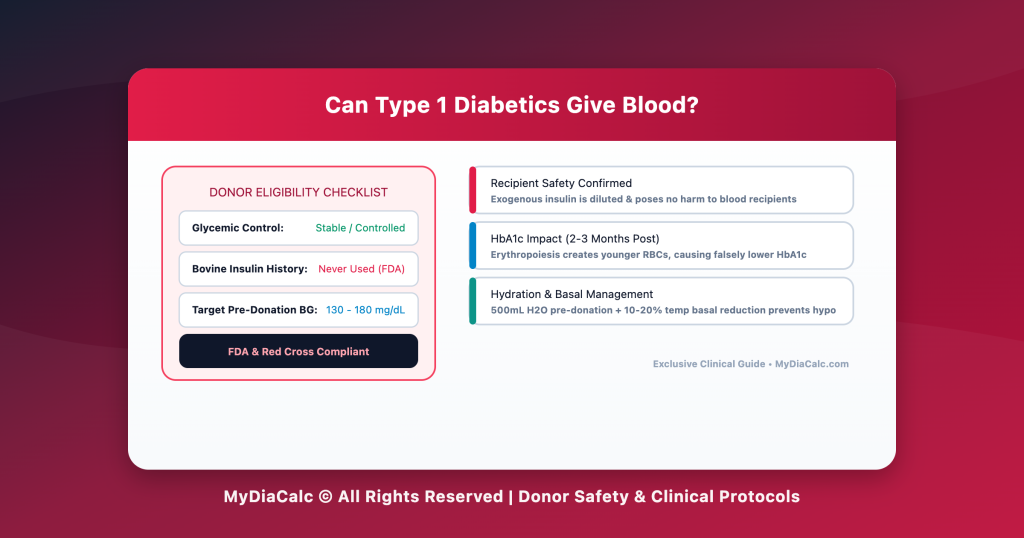
- Insulin Source: The donor must never have used bovine (beef) insulin imported from foreign countries (due to historic risks related to variant Creutzfeldt-Jakob Disease / vCJD). Modern recombinant human insulin and analog insulins (e.g., Lispro, Aspart, Glargine, Degludec) are fully acceptable.
- General Health: The donor must be feeling well on the day of donation, meet weight requirements, and have acceptable hemoglobin levels (\ge 13.0\text{ g/dL} for males, \ge 12.5\text{ g/dL} for females).
B. United Kingdom (NHS Blood and Transplant)
In contrast, the UK maintains a strict policy: anyone who uses insulin to manage diabetes is permanently deferred from donating blood. This restriction is designed primarily to protect the health of the donor (preventing acute hypoglycemia post-donation) rather than concerns over the recipient’s safety.
C. Canada and Australia
Canadian Blood Services and Australian Red Cross Lifeblood permit insulin-dependent donors to give blood, provided their diabetes is stable, they have no severe vascular complications, and their blood glucose levels are within a safe range prior to donation.
2. Does Donated Blood Contain Insulin? Recipient Safety Concerns
A common misconception among first-time donors is that the exogenous insulin in their bloodstream could harm a blood recipient.
+———————————–+
| Donated Whole Blood Unit |
| (~450 – 500 mL) |
+———————————–+
|
v
+———————————–+
| Blood Component Processing |
| (Separated into RBCs, Plasma, |
| Platelets, or Cryoprecipitate) |
+———————————–+
|
+———————–+———————–+
| |
v v
+———————–+ +———————–+
| Packed Red Blood Cells| | Transfused Plasma |
| (Minimal Plasma Volume| | (Insulin diluted in |
| = Negligible Insulin) | | recipient vascular) |
+———————–+ +———————–+
Biological Mechanisms of Insulin Dilution:
- Short Half-Life: Injectable rapid-acting insulin analogs have a circulating plasma half-life of approximately 45 to 65 minutes.
- Component Separation: Donated whole blood is rarely transfused directly. It is processed into Packed Red Blood Cells (PRBCs), plasma, and platelets. PRBCs contain virtually no plasma and negligible insulin.
- Massive Volume Dilution: When plasma is transfused, any residual circulating insulin is diluted across the adult recipient’s average 5\text{ liters} of blood volume, rendering the hormonal concentration biologically insignificant.
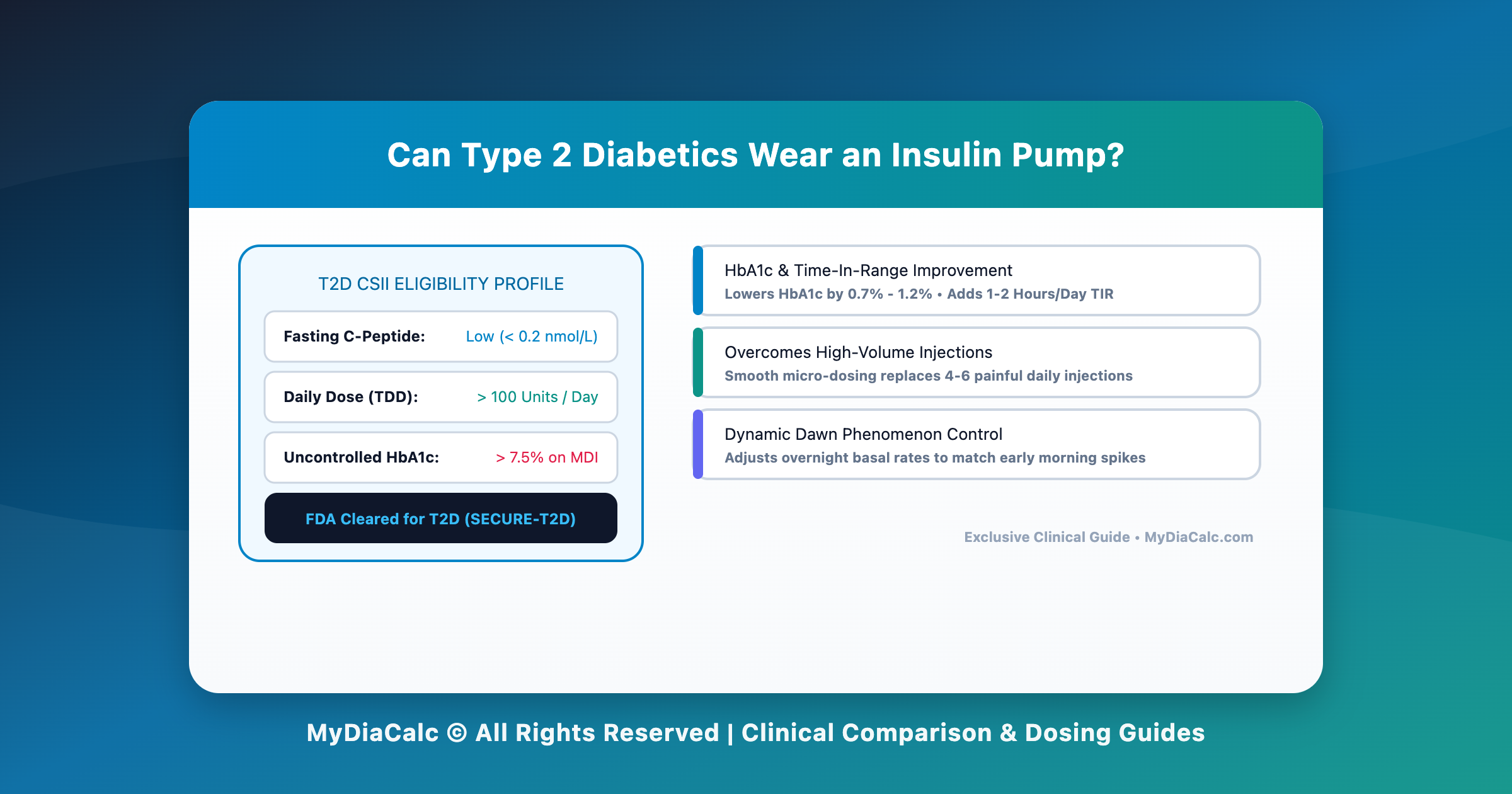
can type 2 diabetics wear an insulin pump?
3. Donor Safety: Cardiovascular & Vascular Exclusion Criteria
While recipient safety is well-established, donor safety remains the primary clinical concern. Donating 450\text{ to }500\text{ mL} of whole blood causes rapid hemodynamic shifts that can strain the cardiovascular system.
+———————————————————————–+
| CLINICAL CONTRAINDICATIONS FOR DONATION WITH T1D |
+———————————————————————–+
| Clinical Finding | Medical Rationale for Deferral |
+—————————-+——————————————+
| Recurrent Severe Hypo | High risk of loss of consciousness post- |
| (< 54 mg/dL in past month) | donation due to fluid volume loss. |
+—————————-+——————————————+
| Diabetic Retinopathy | Sudden blood pressure drop (hypotension) |
| (Proliferative) | can compromise retinal perfusion. |
+—————————-+——————————————+
| Diabetic Nephropathy | Altered intravascular fluid balance and |
| (Proteinuria / Reduced eGFR| potential electrolyte shifts. |
+—————————-+——————————————+
| Cardiovascular Disease | Increased risk of vasovagal reactions or |
| (CAD / Autonomic Neuropathy| impaired baroreceptor compensatory response|
+———————————————————————–+
Why Microvascular Health Matters:
- Autonomic Neuropathy: Long-standing T1D can impair the autonomic nervous system’s ability to adjust heart rate and vascular resistance during sudden volume depletion, increasing the risk of severe vasovagal syncope (fainting).
- Retinal Perfusion: Rapid drops in mean arterial pressure during blood donation can temporarily decrease ocular perfusion pressure in patients with advanced diabetic retinopathy.
🚨 IMPORTANT MEDICAL DISCLAIMER & LIMITATION OF LIABILITY (2/3): Hypoglycemia Risk Acknowledgment: Blood donation causes acute fluid and physiological changes that can alter insulin sensitivity and mask hypoglycemia symptoms. MyDiaCalc ASSUMES ZERO LIABILITY for hypoglycemic events, injuries, or medical emergencies occurring during or after blood donation. Prospective donors must obtain written clearance from their endocrinologist prior to attending a donation appointment.
4. Glycemic Dynamics and HbA1c Impact of Blood Donation
Blood donation triggers distinct physiological responses that directly impact glycemic monitoring, particularly HbA1c accuracy and short-term blood glucose variability.
+———————————————————————–+
| GLYCEMIC & METABOLIC EFFECTS OF BLOOD DONATION |
+———————————————————————–+
| Timeframe | Physiological Mechanism | Clinical Impact |
+————–+——————————-+————————+
| Immediate | Acute fluid volume reduction | Temporary increase in |
| (0-24 Hours) | and stress hormone release | glucose variability; |
| | (Epinephrine, Cortisol) | risk of post-donation |
| | | hypoglycemia. |
+————–+——————————-+————————+
| Short-Term | Loss of ~250mg iron; | Transient reduction in |
| (1-2 Weeks) | Activation of erythropoiesis | overall insulin |
| | (new RBC synthesis) | requirement in some. |
+————–+——————————-+————————+
| Mid-Term | Higher proportion of young | Falsely LOWER HbA1c |
| (1-3 Months) | red blood cells (reticulocytes)| readings due to less |
| | with shorter glycation time | glycated hemoglobin. |
+———————————————————————–+
The “False HbA1c” Phenomenon:
HbA1c measures the percentage of hemoglobin bound to glucose over the average lifespan of a red blood cell (\sim 120\text{ days}).
- Donating 500\text{ mL} of blood removes a large population of older, highly glycated red blood cells.
- The bone marrow responds by accelerating erythropoiesis, releasing young red blood cells (reticulocytes) into circulation.
- Because these young cells have had less time to combine with glucose in the bloodstream, HbA1c tests taken within 2 to 3 months post-donation will show an artificially lowered HbA1c level, which does not accurately reflect true mean blood glucose.
💡 Clinical Tip: Clinicians should rely on Continuous Glucose Monitor (CGM) metrics—such as Time in Range (TIR) and Glucose Management Indicator (GMI)—rather than lab HbA1c in the 90 days following a blood donation.
5. Step-by-Step Protocol: Managing Insulin & Blood Glucose Around Donation
To ensure donor safety and prevent acute hypoglycemia or severe hyperglycemia, follow this structured clinical checklist before, during, and after donating blood.
+———————————————————————–+
| DONATION DAY MANAGEMENT PROTOCOL FOR T1D |
+———————————————————————–+
| PRE-DONATION | • Check glucose (Target: 130 – 180 mg/dL). |
| (2-4 Hours) | • Consume a complex carb meal + hydration (500mL H2O).|
| | • Reduce pre-meal bolus slightly (10-20%) if needed. |
+—————+——————————————————-+
| DURING | • Inform medical staff about your T1D and CGM device. |
| DONATION | • Keep fast-acting glucose tablets within arm’s reach. |
| | • Stop donation immediately if feeling dizzy/light. |
+—————+——————————————————-+
| POST-DONATION | • Rest for 15-20 minutes in recovery area. |
| (0-12 Hours) | • Eat snack provided + drink fluids immediately. |
| | • Set CGM low-glucose alarms to higher threshold. |
| | • Avoid heavy exercise or hot baths for 24 hours. |
+———————————————————————–+
Key Insulin & Hydration Adjustments:
- Hydration: Drink at least 500\text{ mL} (16\text{ oz}) of water or electrolyte solution immediately prior to donation to maintain intravascular volume and prevent vasovagal reactions.
- Temporary Basal Rates: Insulin pump users may consider setting a temporary basal rate reduction of 10% to 20% for 3 to 6 hours post-donation to mitigate the risk of late-onset hypoglycemia caused by increased metabolic expenditure during tissue recovery.
6. Summary Checklist for Prospective T1D Blood Donors
Before booking your blood donation appointment, verify that you meet all safety criteria:
- [ ] Well-controlled T1D: No severe hypoglycemic episodes requiring third-party assistance within the past 3 to 6 months.
- [ ] No Microvascular Complications: Free from advanced proliferative retinopathy, active nephropathy, or symptomatic autonomic neuropathy.
- [ ] No Bovine Insulin History: Never used historical beef-derived insulin products.
- [ ] Stable Hemoglobin: Hemoglobin levels meet donation center minimums (\ge 12.5\text{ g/dL} for women, \ge 13.0\text{ g/dL} for men).
- [ ] Pre-Donation Glucose Check: Blood glucose is well within a safe range (130\text{ to }180\text{ mg/dL}) on the morning of donation.
Conclusion: Balancing Altruism with Personal Safety
Can Type 1 Diabetics give blood? Yes—provided strict safety standards, local regulatory approvals, and careful glycemic protocols are maintained.
While the donated blood itself is completely safe for recipients, the biological demand placed on the donor requires stable glycemic control, good vascular health, and proactive insulin management. By leveraging Continuous Glucose Monitors, adjusting basal/bolus ratios, and maintaining optimal hydration, individuals with Type 1 Diabetes can safely participate in this life-saving act of community service.
🚨 FINAL MEDICAL DISCLAIMER & LIMITATION OF LIABILITY (3/3): By utilizing MyDiaCalc, its calculators, tools, comparison charts, and educational guides, you explicitly acknowledge and agree that all therapeutic health decisions, glycemic interpretations, device selection choices, and clinical management decisions remain exclusively your personal responsibility or the responsibility of your licensed healthcare provider. MyDiaCalc, its authoring team, development staff, and affiliated entities SHALL NOT BE HELD LIABLE for any direct, indirect, incidental, consequential, or punitive damages resulting from the application or misuse of any calculations, guidelines, diagnostic benchmarks, or clinical concepts presented herein. Always work directly with your licensed endocrinologist or certified diabetes care specialist to establish safe individual treatment protocols.
Powered by MyDiaCalc © All Rights Reserved.