Effective diabetes management requires continuous balance, strategic data tracking, and a deep understanding of metabolic physiology. For individuals living with Type 1 diabetes, insulin-requiring Type 2 diabetes, or latent autoimmune diabetes in adults (LADA), achieving optimal blood glucose control relies heavily on two main pillars: basal insulin, which covers background liver glucose production, and bolus insulin, which covers dietary carbohydrates and corrects hyperglycemia.
Central to mealtime bolus dosing is the Insulin-to-Carbohydrate Ratio (ICR). This clinical metric determines exactly how many grams of carbohydrate one unit of rapid-acting or short-acting insulin can metabolize. Because human physiology is dynamic, an individual’s ICR is rarely static; it can shift based on physical activity, hormonal fluctuations, stress, sleep architecture, age, and changes in body composition.
This comprehensive clinical guide explores the fundamental science behind the Insulin-to-Carb Ratio, step-by-step methodologies for testing and optimizing your settings, strategies for navigating complex real-world variables, and actionable insights to help you maintain optimal Time-in-Range (TIR).
“To easily determine your starting ratio based on your Total Daily Dose, you can use our [Insulin-to-Carb Ratio Calculator] before fine-tuning your settings.”
🚨 CRITICAL MEDICAL DISCLAIMER & LIMITATION OF LIABILITY (1/3): MyDiaCalc, its developers, authors, and operators DO NOT PROVIDE MEDICAL ADVICE. All information, clinical concepts, formulas, and recommendations presented in this guide are intended strictly for educational, research, and informational purposes. MyDiaCalc EXPRESSLY DISCLAIMS ALL LIABILITY for any clinical decisions, insulin dosage adjustments, adverse health outcomes, episodes of severe hypoglycemia, or diabetic ketoacidosis resulting from self-guided dosing changes. Always consult your endocrinologist, certified diabetes care and education specialist (CDCES), or clinical healthcare provider before making any modifications to your insulin regimens or therapeutic settings.
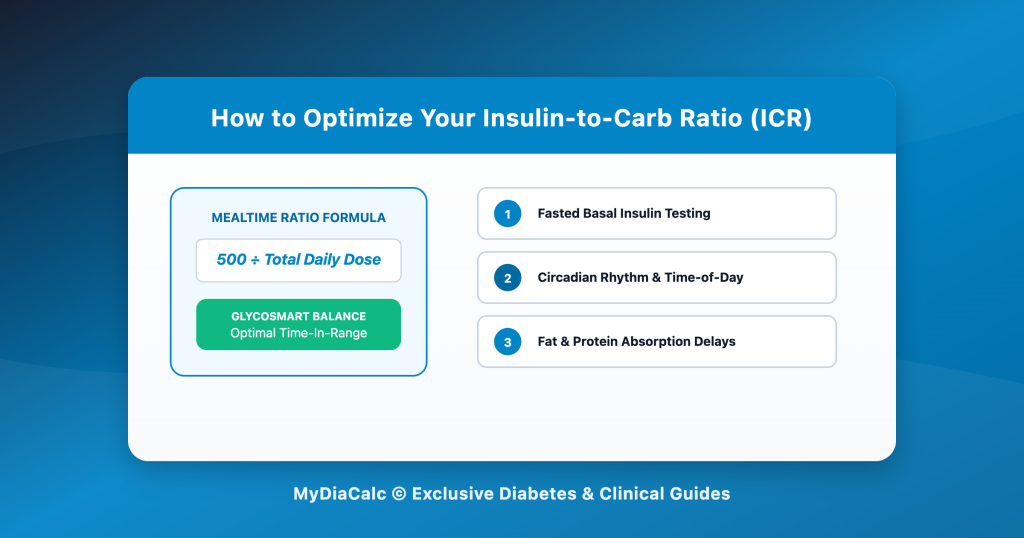
1. What is the Insulin-to-Carbohydrate Ratio (ICR)?
The Insulin-to-Carbohydrate Ratio (ICR) represents the relationship between insulin administration and dietary carbohydrate absorption. Specifically, it identifies how many grams of carbohydrate are offset or balanced by one single unit of insulin.
Understanding the Notation
ICR is typically expressed as a ratio (1:X), where:
- 1 represents one unit of insulin.
- X represents the number of carbohydrate grams that one unit will cover.
For example, an ICR of 1:10 means that 1\text{ unit} of insulin handles 10\text{ grams} of dietary carbohydrates. If a person with an ICR of 1:10 consumes a meal containing 70\text{ grams} of carbohydrates, the basic calculation for their mealtime bolus is:
\text{Meal Bolus (Units)} = \frac{\text{Total Carbohydrate Intake (grams)}}{\text{ICR Value}} = \frac{70}{10} = 7\text{ Units}
Conversely, an individual with a stronger ratio—such as 1:6—requires more insulin for the same amount of food (70 \div 6 = 11.6\text{ Units}). Conversely, a weaker ratio—such as 1:15—requires less insulin (70 \div 15 = 4.6\text{ Units}).
Why Precision Matters
An inaccurate ICR can lead to persistent postprandial (after-meal) blood glucose volatility:
- An ICR That Is Too Weak (Under-dosing): If your ratio is set to 1:15 when your true biological need is 1:10, you will under-dose insulin. This results in postprandial spikes, prolonged hyperglycemia, increased systemic inflammation, and a reduced Time-in-Range.
- An ICR That Is Too Strong (Over-dosing): If your ratio is set to 1:6 when your true biological need is 1:10, you will over-dose insulin. This leads to rapid post-meal drops, severe hypoglycemia, rebound hyperglycemia (Somogyi effect), and unnecessary calorie consumption from treating low blood sugar.
2. Estimating Initial ICR: Clinical Formulas
When a patient is newly diagnosed or transitioning to an intensive insulin regimen (Multiple Daily Injections or Insulin Pump Therapy), clinical endocrinologists use standardized mathematical rules to establish a baseline ICR.
These formulas rely on calculating the patient’s Total Daily Dose (TDD) of insulin—the combined sum of all basal (background) units and bolus (meal and correction) units administered over a typical 24-hour period.
The 500 Rule (For Rapid-Acting Insulin Analogs)
The 500 Rule is the industry standard for patients utilizing rapid-acting insulin analogs such as Insulin Lispro (Humalog), Insulin Aspart (Novolog/Fiasp), or Insulin Glulisine (Apidra).
\text{Estimated ICR (grams per unit)} = \frac{500}{\text{Total Daily Dose (TDD)}}
Clinical Example:
Consider an individual who uses 24\text{ units} of basal insulin daily and averages 26\text{ units} of mealtime bolus insulin daily. Their Total Daily Dose (TDD) is:
\text{TDD} = 24 + 26 = 50\text{ Units}
Applying the 500 Rule to calculate their starting ICR:
\text{ICR} = \frac{500}{50} = 10\text{ grams per unit (expressed as 1:10)}
The 450 Rule (For Regular / Short-Acting Insulin)
For patients utilizing older Regular human insulin (such as Humulin R or Novolin R), clinicians often use the 450 Rule to account for the slower onset and longer duration of action associated with non-analog insulins:
\text{Estimated ICR (grams per unit)} = \frac{450}{\text{Total Daily Dose (TDD)}}
Using the same example of a 50\text{-unit} TDD:
\text{ICR} = \frac{450}{50} = 9\text{ grams per unit (expressed as 1:9)}
3. Prerequisite: Verifying Basal Insulin Accuracy
Before attempting to test, evaluate, or adjust your Insulin-to-Carbohydrate Ratio, you must verify that your basal (background) insulin dose is correctly calibrated.
Basal insulin is designed to keep your blood glucose stable during periods of fasting (such as overnight or between meals) by counterbalancing the liver’s natural glucose release (gluconeogenesis and glycogenolysis).
Quick Tool: Ready to find your starting mealtime dosage? Use our interactive [Insulin-to-Carbohydrate Ratio Calculator] now.
The “Basal Masking” Trap
Attempting to adjust an ICR while basal insulin is incorrect creates a misleading diagnostic feedback loop:
- Excess Basal Insulin: If your basal dose is too high, your blood glucose will naturally drift downward while fasting. If you eat a meal with a weak ICR, the excess basal insulin may mask the weak ratio by pulling your glucose down, giving the illusion that your ICR is correct. However, if you skip a meal, you will crash into severe hypoglycemia.
- Insufficient Basal Insulin: If your basal dose is too low, your blood glucose will continually drift upward while fasting. You may mistakenly conclude that your mealtime ICR is too weak and aggressively strengthen it, leading to volatile post-meal spikes followed by late crashes.
+———————————————————————–+
| THE BASAL TESTING CHECKLIST |
+———————————————————————–+
| 1. No food or calorie intake for 5 to 6 hours before/during test. |
| 2. No bolus insulin (active IOB = 0) administered for 4+ hours. |
| 3. No physical exercise or heavy activity within 8 hours. |
| 4. Starting blood glucose must be in range (80 – 140 mg/dL). |
| 5. No alcohol consumption within 24 hours prior to the test. |
+———————————————————————–+
How to Perform a Fasted Basal Test
- Select a Testing Window: Choose one specific period (e.g., overnight from 12:00 AM to 7:00 AM, or daytime from 8:00 AM to 1:00 PM).
- Establish a Clean Starting Point: Ensure your blood sugar is stable and between 80\text{–}140\text{ mg/dL} prior to starting. There must be zero active insulin on board (IOB) from previous meal boluses or corrections.
- Fast During the Window: Consume zero calories, carbohydrates, fats, or proteins. Water is permitted and encouraged.
- Monitor Glucose Velocity: Record blood glucose levels every hour using a continuous glucose monitor (CGM) or fingerstick blood glucose meter.
- Analyze the Trend:
- Stable Basal: Blood glucose remains within \pm 30\text{ mg/dL} of the starting value throughout the entire 5-to-6-hour window.
- Basal Too High: Blood glucose drops by more than 30\text{ mg/dL} (or drops into hypoglycemia). The basal rate must be reduced before testing ICR.
- Basal Too Low: Blood glucose rises by more than 30\text{ mg/dL}. The basal rate must be increased before testing ICR.
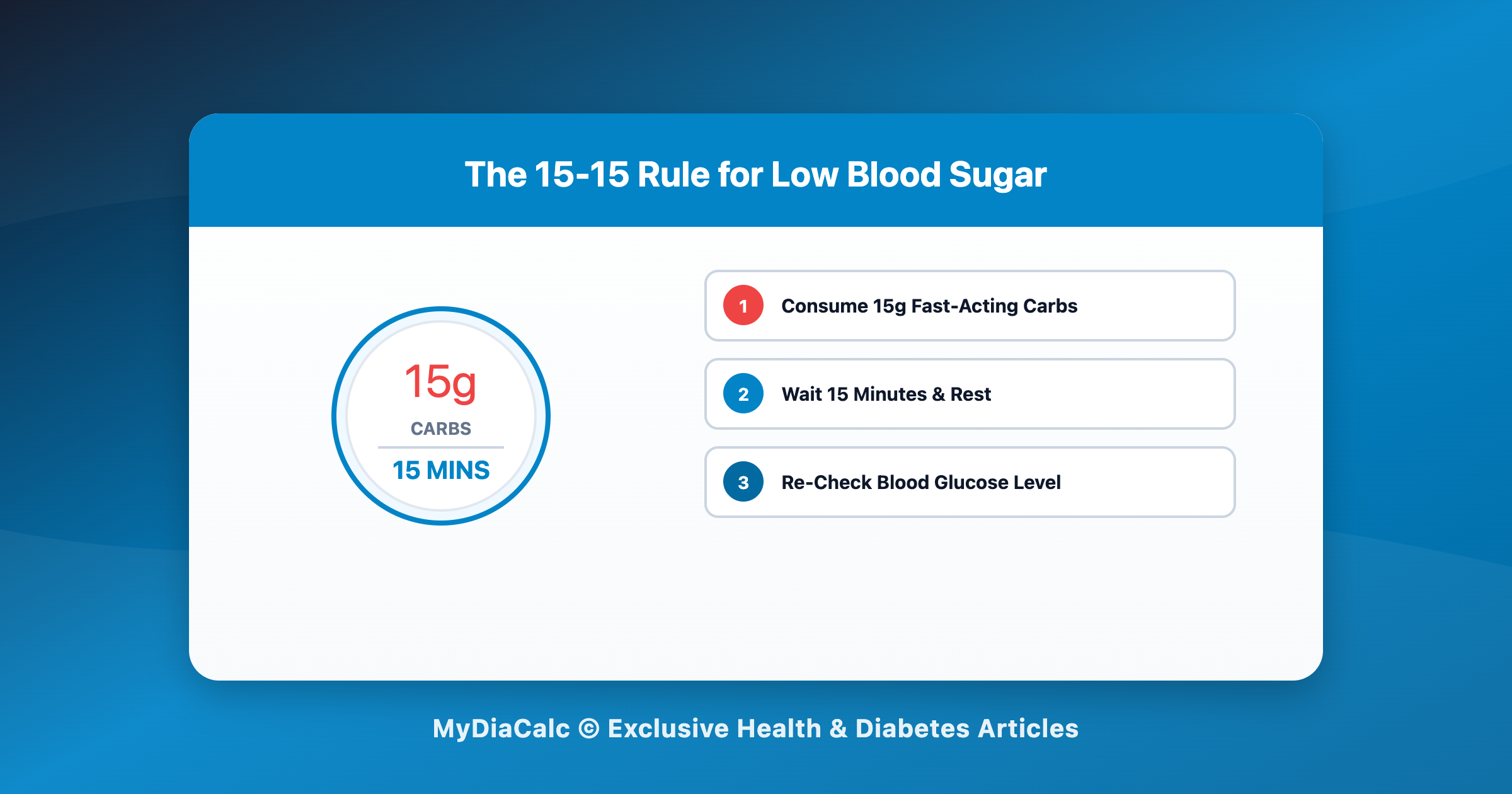
🚨 IMPORTANT MEDICAL DISCLAIMER & LIMITATION OF LIABILITY (2/3): Hypoglycemia Alert: Fasting tests and insulin adjustments carry an inherent risk of acute low blood sugar (hypoglycemia). Always ensure fast-acting simple carbohydrates (such as glucose tablets, gel packs, or fruit juice) and emergency glucagon are readily accessible. MyDiaCalc ASSUMES NO RESPONSIBILITY or liability for medical emergencies, loss of consciousness, or injuries arising from fasting protocols or insulin adjustments.
4. Step-by-Step Protocol: How to Test and Optimize Your ICR
Once your basal insulin rate is validated and stable, you can systematically test and optimize your Insulin-to-Carbohydrate Ratio.
+———————————–+
| Step 1: Validate Basal Rates |
+———————————–+
|
v
+———————————–+
| Step 2: Prepare Standardized Test|
| Meal (Known Carbs) |
+———————————–+
|
v
+———————————–+
| Step 3: Administer Exact Bolus |
| Based on Current ICR |
+———————————–+
|
v
+———————————–+
| Step 4: Monitor Glucose at 2h |
| and 4h Post-Meal |
+———————————–+
|
+—————–+—————–+
| |
v v
[4h Glucose > Start + 30] [4h Glucose < Start – 30]
| |
v v
Ratio is TOO WEAK Ratio is TOO STRONG
(Strengthen ICR, e.g., 1:12->1:10) (Weaken ICR, e.g., 1:10->1:12)
Phase 1: Designing the Ideal Test Meal
To evaluate an ICR accurately, you must eliminate metabolic confounding factors like dietary fat, protein, and complex fiber delays:
- Carbohydrate Target: Select a simple, easily quantifiable carbohydrate meal containing between 40\text{ and }60\text{ grams} of carbs (e.g., plain white rice, oatmeal made with water, or plain toast with fruit jelly).
- Low Fat & Low Protein: Ensure the meal contains less than 5\text{ grams} of fat and less than 10\text{ grams} of protein. High dietary fat delays gastric emptying, altering normal absorption curves.
- Exact Measurement: Weigh the food on a digital kitchen scale rather than using volumetric estimates (cups or spoonfuls).
Phase 2: Executing the Test
- Pre-Meal Conditions: Confirm starting blood glucose is between 90\text{ and }130\text{ mg/dL}, with no active insulin (IOB) on board.
- Bolus Timing: Administer your meal bolus according to your current ICR. For standard rapid-acting analogs, bolus 15\text{ to }20\text{ minutes} prior to the first bite to match insulin onset with carbohydrate absorption.
- Avoid Interferences: Do not engage in physical exercise, consume additional food, or take correction boluses during the 4-hour post-meal testing window.
Phase 3: Analyzing the Results at 2 and 4 Hours
Track your blood glucose progression using the clinical benchmark intervals:
- 1 to 2 Hours Post-Meal (Peak Window): Blood glucose will naturally rise as carbohydrates are converted into glucose. In a well-managed response, peak glucose should remain below 180\text{ mg/dL} (10.0\text{ mmol/L}).
- 4 Hours Post-Meal (Completion Window): Rapid-acting insulin analogs complete their active metabolic profile within 3.5 to 4.5 hours. At the 4-hour mark, your blood glucose should return to within \pm 30\text{ mg/dL} of your starting pre-meal reading.
| 4-Hour Post-Meal Glucose Level | Clinical Diagnostic Interpretation | Actionable ICR Adjustment |
| Higher than Start + 30\text{ mg/dL} | Current ICR is Too Weak (Insufficient insulin administered) | Strengthen the Ratio: Decrease the carbohydrate number (e.g., adjust from 1:12 to 1:10). |
| Lower than Start – 30\text{ mg/dL} | Current ICR is Too Strong (Excess insulin administered) | Weaken the Ratio: Increase the carbohydrate number (e.g., adjust from 1:10 to 1:12). |
| Within \pm 30\text{ mg/dL} of Start | Current ICR is Optimized | Maintain Setting: Ratio accurately matches carbohydrate metabolism. |
Quick Tool: Ready to find your starting mealtime dosage? Use our interactive [Insulin-to-Carbohydrate Ratio Calculator] now.
5. Advanced Real-World Variables Impacting ICR
Human metabolism is complex. Even after identifying a precise baseline ICR, real-world variables can alter how your body responds to carbohydrates.
A. Diurnal Variations and Circadian Rhythms
Insulin sensitivity is rarely uniform across a 24-hour period. Most individuals experience natural fluctuations driven by circadian hormone release:
- Dawn Phenomenon & Morning Resistance: In the early morning hours (4:00 AM to 9:00 AM), the pituitary gland and adrenal glands release counter-regulatory hormones, including cortisol, growth hormone, and epinephrine. These hormones induce mild peripheral insulin resistance. Consequently, many individuals require a stronger ICR in the morning (e.g., 1:6 or 1:8).
- Mid-Day Sensitivity: By lunchtime and early afternoon, cortisol levels drop and general physical movement increases, leading to higher insulin sensitivity. The afternoon ICR is frequently weaker (e.g., 1:12 or 1:15).
- Evening Stability: Dinner ratios often sit between morning and afternoon settings (e.g., 1:10), depending on evening activity levels and sleep patterns.
+———————————————————————–+
| EXAMPLE OF TIME-OF-DAY ICR VARIATIONS |
+———————————————————————–+
| Time Block | Circadian Profile | Typical ICR Setting |
+———————–+————————+———————-+
| Morning (Breakfast) | High Cortisol/Resistant| 1:7 (1u per 7g) |
| Mid-Day (Lunch) | High Sensitivity | 1:12 (1u per 12g) |
| Evening (Dinner) | Moderate Sensitivity | 1:10 (1u per 10g) |
| Overnight (Late Snack)| Variable | 1:10 (1u per 10g) |
+———————————————————————–+
B. The Pizza Effect: Fat and Protein Delays
While carbohydrates are the primary macronutrient driving immediate blood glucose elevation, high intake of dietary fats and proteins significantly alters digestion curves:
- Gastric Emptying Delay: Dietary fats slow down stomach emptying. Instead of carbohydrates absorbing within 1 to 2 hours, absorption can be delayed over 4 to 8 hours.
- Gluconeogenesis from Protein: Excess dietary protein is partially converted into glucose by the liver via gluconeogenesis over an extended timeframe.
Clinical Result: Taking a single standard bolus for a high-fat, high-protein meal (like pizza, burgers, or creamy pasta) often causes early hypoglycemia (because the insulin acts before the delayed carbohydrates absorb), followed by severe late hyperglycemia 3 to 6 hours later.
Advanced Dosing Strategies for Mixed Meals:
- Split Bolus (Multiple Daily Injections): Administer 50% to 60% of the insulin bolus immediately before the meal, and administer the remaining 40% to 50% 2 to 3 hours later.
- Extended/Dual-Wave Bolus (Insulin Pump Users): Program the pump to deliver a portion of the bolus immediately (e.g., 40%) and spread the remaining portion (e.g., 60%) evenly over an extended duration of 3 to 5 hours.
C. Physical Activity and Exercise
Physical exercise alters glucose uptake through insulin-independent mechanisms:
- Aerobic Exercise (Cardio, Running, Cycling): Stimulates GLUT4 glucose transporter translocation directly to skeletal muscle cell membranes without requiring extra insulin. Aerobic activity increases insulin sensitivity during exercise and for up to 24 to 48 hours post-workout. Action: Weaken mealtime ICRs or reduce pre-meal boluses by 20% to 50% prior to workout sessions.
- Anaerobic Exercise (Weightlifting, Sprinting, HIIT): Triggers a sympathetic “fight-or-flight” response, releasing catecholamines (adrenaline) that cause the liver to dump stored glycogen into the bloodstream. This can cause transient hyperglycemia post-workout. Action: Avoid over-correcting immediate post-workout spikes, as insulin sensitivity usually increases several hours later.
6. Common Pitfalls in Ratio Management
Achieving consistent postprandial control requires avoiding common missteps in carbohydrate counting and insulin administration:
+———————————————————————–+
| 5 MOST COMMON ICR PITFALLS TO AVOID |
+———————————————————————–+
| 1. Inaccurate Carbohydrate Counting (Estimating vs. Weighing Food). |
| 2. Failure to Pre-Bolus (Injecting Insulin After Eating). |
| 3. Insulin Stacking (Taking Correction Doses Too Close Together). |
| 4. Ignoring Active Insulin on Board (IOB). |
| 5. Adjusting ICR While Basal Rates Are Incorrect. |
+———————————————————————–+
1. Eyeballing Carbohydrate Quantities
Visual estimation of meal portion sizes is a major source of error in ICR management. Studies consistently show that individuals tend to underestimate carbohydrate content in large or restaurant meals by 20% to 50%.
- Solution: Use a digital food scale and validated nutrition databases to weigh portion sizes, especially for high-density carbohydrates like rice, pasta, cereal, and potatoes.
2. Poor Pre-Bolus Timing
Even rapid-acting insulin analogs take 15 to 30 minutes to reach systemic circulation and begin clearing glucose. Ingesting fast-absorbing carbohydrates immediately upon taking insulin allows blood glucose levels to spike rapidly before the insulin active peak occurs.
- Solution: Administer meal boluses 15 to 20 minutes prior to eating when blood sugar is in range. If pre-meal glucose is elevated, extend the pre-bolus time slightly to allow the insulin to start working before food is ingested.
3. Insulin Stacking and Ignoring IOB
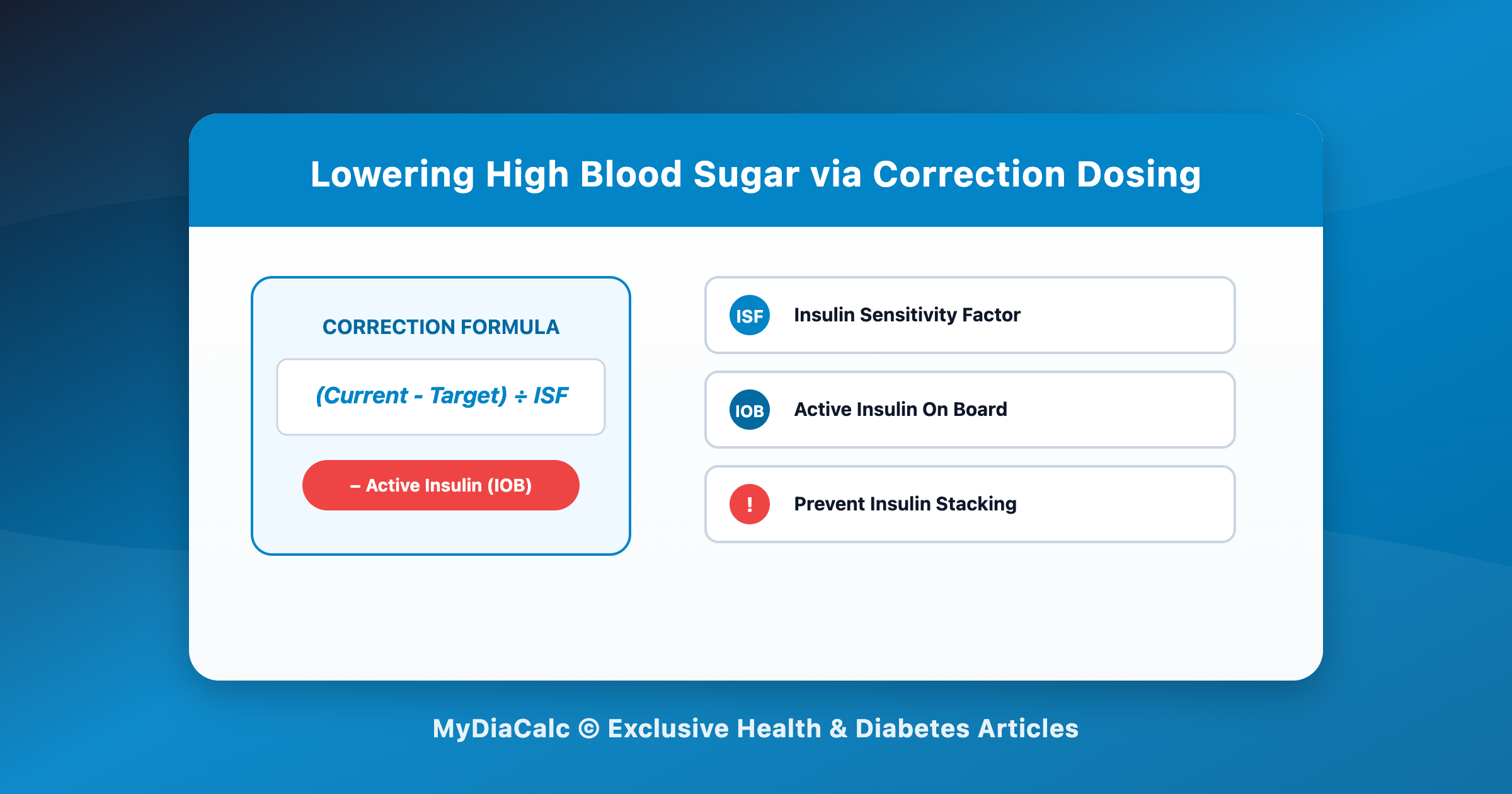
When blood sugar remains high 1 to 2 hours after a meal, individuals often panic and administer a correction bolus. Because rapid-acting insulin remains active in the body for 3 to 5 hours, taking additional insulin while previous meal insulin is still working causes insulin stacking, leading to severe delayed hypoglycemia.
- Solution: Always calculate Active Insulin on Board (IOB) before administering correction doses. Use smart insulin pens or automated pump algorithms to track remaining active units.
7. Comparative Summary: Ratio Adjustments
The following matrix summarizes common clinical scenarios, continuous glucose monitor (CGM) trend patterns, and appropriate adjustment strategies:
| Clinical Scenario | CGM / Fingerstick Pattern | Underlying Cause | Corrective Action Protocol |
| Early Spike & Late Drop | Rapid rise at 1h (>200\text{ mg/dL}), followed by low sugar at 4h | Poor bolus timing (Insulin given too late) | Keep same ICR; extend pre-bolus time to 20–25 mins before eating. |
| Persistent Spike at 4h | Flat high line; glucose remains elevated 4+ hours post-meal | ICR is too weak or carbs underestimated | Re-verify carb counts. If accurate, strengthen ICR (e.g., 1:10 \rightarrow 1:8). |
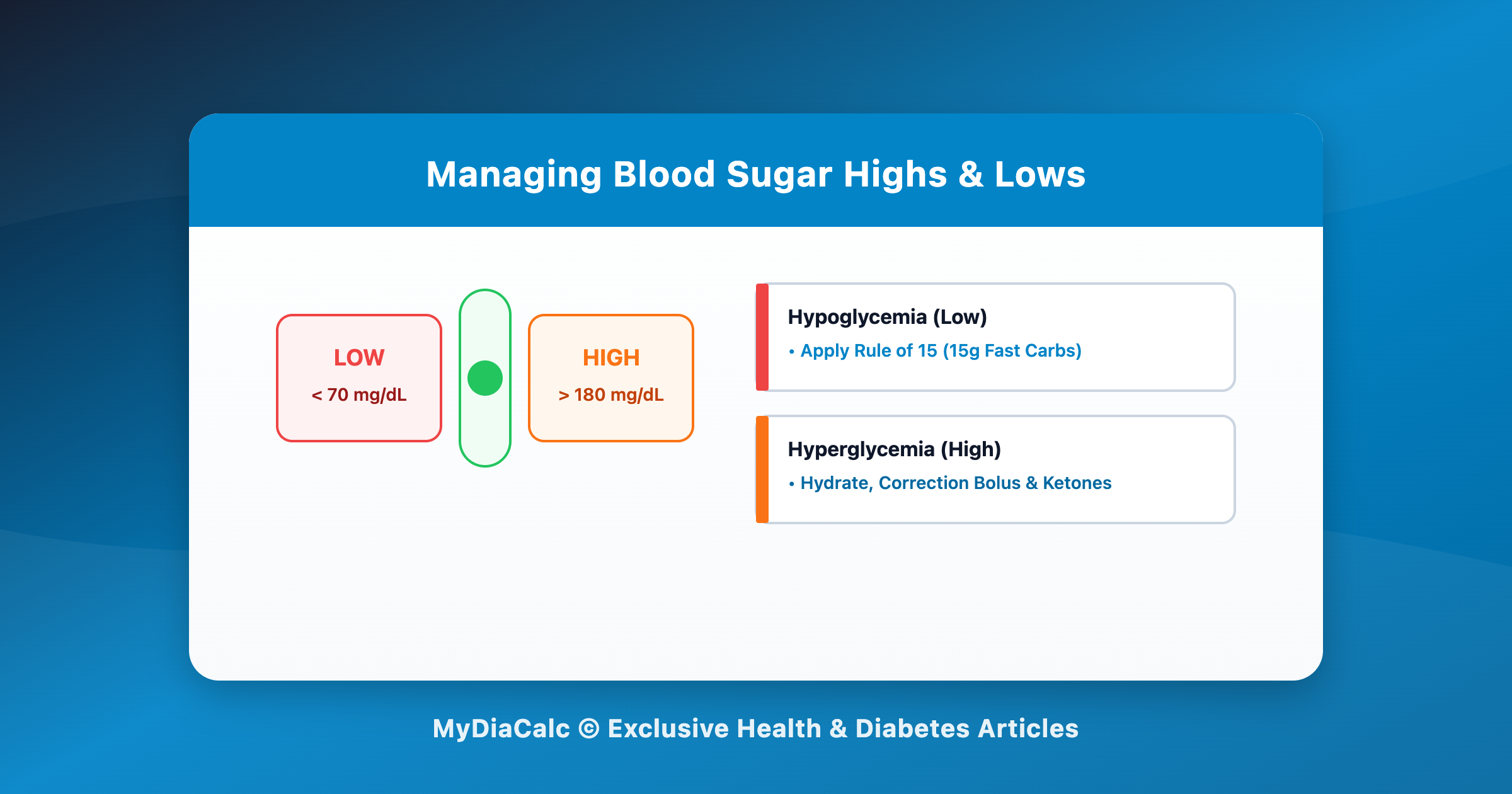
| Post-Meal Hypoglycemia | Glucose drops below 70\text{ mg/dL} within 2 to 3 hours post-meal | ICR is too strong or activity increased | Weaken ICR (e.g., 1:10 \rightarrow 1:12) or reduce bolus for exercise. |
| Late Spike at 5–6h | In-range at 2h, but glucose climbs hours later | High fat/protein meal delayed absorption | Use split bolus or extended wave feature for mixed meals. |
Quick Tool: Ready to find your starting mealtime dosage? Use our interactive [Insulin-to-Carbohydrate Ratio Calculator] now.
🚨 FINAL MEDICAL DISCLAIMER & LIMITATION OF LIABILITY (3/3): By utilizing MyDiaCalc, its calculators, and its educational guides, you explicitly acknowledge, understand, and agree that all therapeutic health decisions, insulin administrations, and clinical management choices remain exclusively your personal responsibility. MyDiaCalc, its authoring team, development staff, and affiliated entities SHALL NOT BE HELD LIABLE for any direct, indirect, incidental, consequential, or punitive damages resulting from the application or misuse of any calculations, guidelines, or metabolic concepts presented herein. Always work directly with your licensed endocrinologist or medical provider to establish safe insulin protocols.
Powered by MyDiaCalc © All Rights Reserved.